

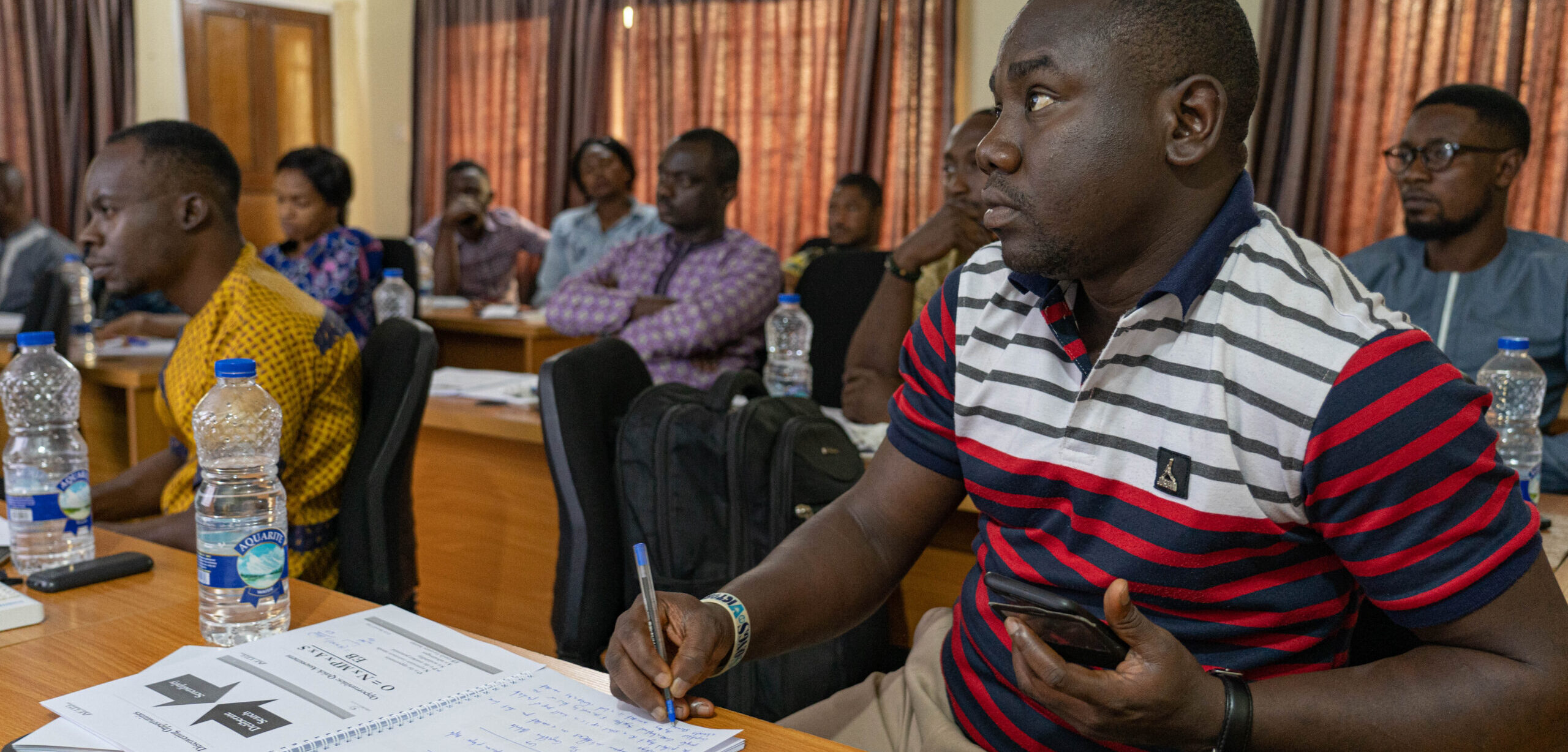
The AGRAR 2 project strengthened smallholder farmers, agribusinesses and microfinance banks in Nigeria through training, accredited training programmes and new financial and learning opportunities.
Starting situation
Despite an economic recovery since the end of 2020, the consequences of the COVID-19 pandemic continue to be clearly felt in Nigeria. Unemployment is over 33%, and youth unemployment is even more than 42%. Inflation remains high at almost 16%, while food prices are rising steadily, exacerbating social inequality. Around 40% of the population – about 83 million people – live below the poverty line. This is increasingly leading to social tensions and increased security risks.
Smallholder farmers in particular are affected by the economic uncertainties. A possible withdrawal of gasoline subsidies would massively increase their operating costs, while their sales markets would remain weak. Many farms are therefore at risk of closures.
Against this background, targeted support for smallholders, agricultural enterprises, microfinance banks and microinsurance is crucial to strengthen the agricultural value chain and secure income and employment opportunities.
Goal
Increasing the efficiency of smallholders, agribusinesses and microfinance banks as well as their networking in value chains.
RESULTS
- 150 trainers of trainers (ToT) were trained to train more than 30,000 smallholder farmers in good agricultural practice, accounting, cooperatives, biochar, market access in the aquaculture, arable farming, cashew and cassava value chains, among others.
- The training courses Specialist for Animal Husbandry, Specialist for Quality Assurance and Specialist for Poultry Technology have been nationally accredited. 120 people have completed one of the three training courses.
- In cooperation with 10 microfinance banks, 5 microinsurance products were developed and 3,650 policies were sold to smallholders .
- 161 employees and managers from 69 microfinance banks have been trained on agricultural loans.
- An agricultural training centre with a capacity for 60 trainees was built.
- A virtual platform with learning modules and a separate virtual learning management system for the training center were developed.
Project:
2021 – 2025
Project budget:
€3.71 million
Partner organisations:
Hasal MFB, LAPO MFB, TGI Group/Chi Farms, TUNS Farms, Big Dutchman, Dayntee Farms, Animal Care Consult Services, Obasanjo Farms
Country:
Nigeria
Funder:
BMZ via sequa
OUR PARTNERS